

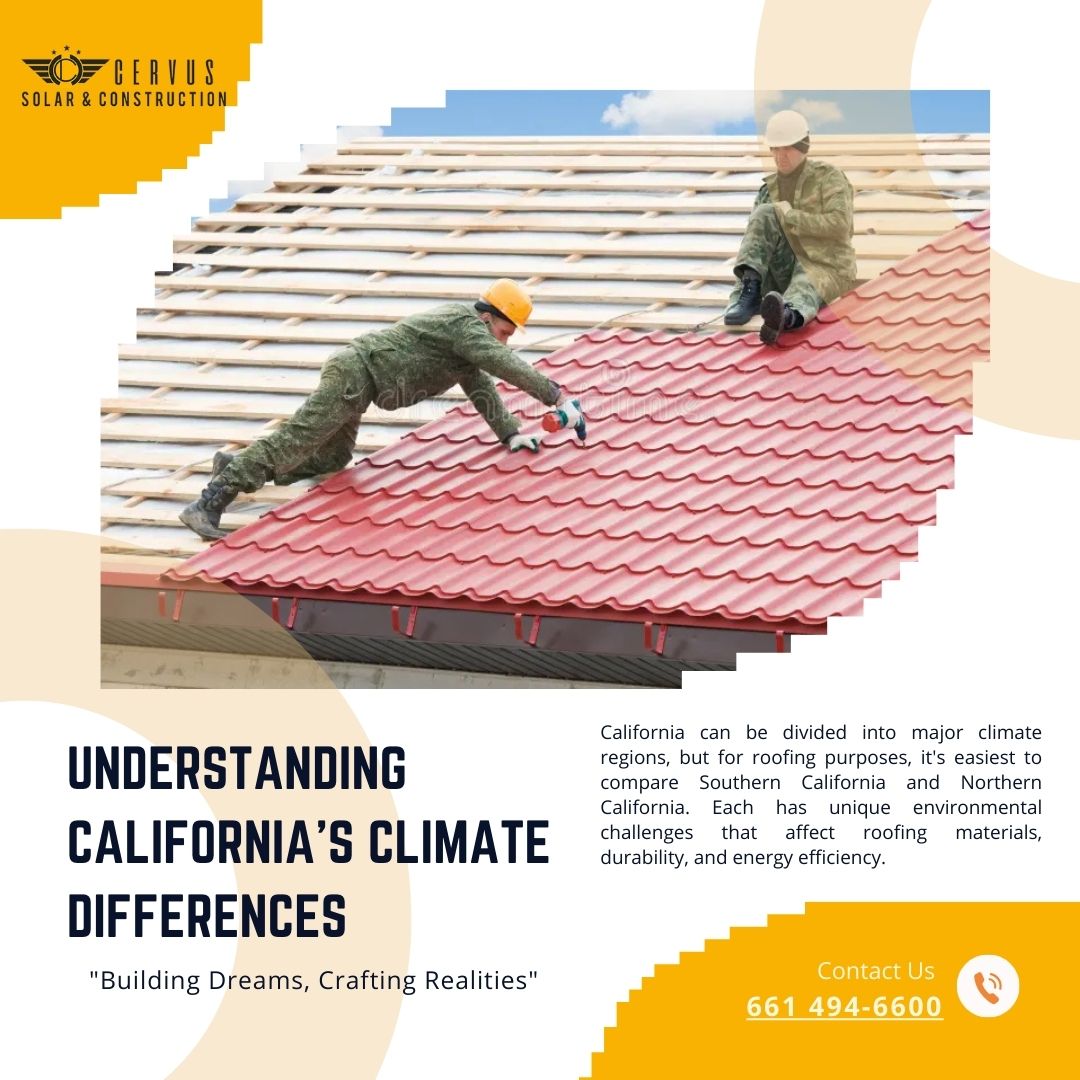
Choosing the right roofing system in California isn’t a one-size-fits-all decision. The state spans nearly 800 miles and includes a wide variety of climate zones—from hot, dry deserts and coastal humidity to cool, rainy forests. Because of these major weather differences, homeowners in Southern California require roofing materials that perform very differently from those in Northern California.
This guide explains how climate impacts roofing performance, what materials work best in each region, and how trusted roofing companies like Cervus, Inc help homeowners make the right choice.
Understanding California’s Climate Differences
California can be divided into major climate regions, but for roofing purposes, it’s easiest to compare Southern California and Northern California. Each has unique environmental challenges that affect roofing materials, durability, and energy efficiency.
Southern California Climate
Includes areas like Los Angeles, San Diego, Orange County, Palm Springs, Inland Empire
Key climate features:
- Hot summers
- Mild winters
- Intense UV exposure
- Occasional Santa Ana winds
- Low annual rainfall
- Wildfire-prone inland areas
Southern California is known for heat exposure and dry conditions, which means roofing must withstand UV radiation and wildfire risks, while supporting better cooling efficiency.
Northern California Climate
Includes areas like San Francisco, Sacramento, Napa, Santa Rosa, Redding
Key climate features:
- Cool, wet winters
- Higher annual rainfall
- Occasional snowfall in mountain regions
- More coastal fog and humidity
- Greater tree coverage (leading to debris & moss)
Northern California experiences more moisture, seasonal storms, and cold snaps, meaning roofing must resist moisture, wind, and biological growth.
Best Roofing Materials for Southern California
Homeowners in Southern California benefit from roofing materials that stay cool, resist fire, and don’t degrade quickly under intense sunlight. Here are the best-performing options:
1. Clay & Concrete Tiles
Clay tiles are iconic in California architecture, with excellent heat performance.
Advantages:
- Reflect heat naturally
- Class A fire-rated
- Long lifespan (50–100 years)
- Minimal UV damage
Best for Mediterranean, Spanish, and Mission-style homes frequently seen in Southern California.
- Metal Roofing
Metal roofing has become popular due to energy efficiency and durability.
Advantages:
- Reflective surface reduces cooling costs
- Class A fire rating for wildfire zones
- Lightweight and long-lasting
- Ideal for solar panel installation
Great for areas like Palm Desert, Riverside, and San Diego, where heat and wildfire safety are priorities.
- Asphalt Shingles (Premium or Cool Roof Models)
Asphalt shingles are cost-effective and widely available, especially newer reflective “cool roof” varieties.
Advantages:
- Affordable installation
- Wide style options
- Heat-resistant models available
- Class A fire-rated versions for high-risk zones
When installing shingles in Southern California, homeowners often choose “cool roof compliant” shingles that reduce energy bills in hot summers.
Best Roofing Materials for Northern California
Northern California needs roofs that are moisture-resistant, cold-tolerant, and strong against wind and rain. Here are top choices:
1. Composition Asphalt Shingles
These remain the most popular choice due to durability and low maintenance.
Advantages:
- Good performance in wet and windy climates
- Resistant to algae and moss (with zinc/copper options)
- Wide design variety
- Budget-friendly
Certain dimensional shingles also improve wind resistance for storm-prone areas like the North Bay and Sacramento Valley.
- Metal Roofing
Metal roofing is just as useful in Northern California as in the south, but for different reasons.
Advantages:
- Sheds rain and snow easily
- Resists moss and mildew
- Withstands high winds
- Long lifespan with minimal maintenance
Works especially well in mountain towns and forested regions, where heavy rain or pine debris are common.
- Synthetic or Composite Roofing
Synthetic materials can mimic slate or wood while offering better moisture resistance.
Advantages:
- Lightweight and durable
- Resistant to rot, algae, and mold
- Class A fire options available
- Cost-effective alternative to natural slate
Excellent for areas with tree coverage, fog, and frequent storms.
Additional Regional Roofing Considerations
Beyond material choice, there are regional factors California homeowners should think about:
✔ Wildfire Safety
Wildfire risk is present statewide but is especially strong in Southern California and the Sierra Foothills.
Recommended materials:
- Metal
- Clay tile
- Concrete tile
- Class A composite shingles
Avoid wood shake roofing due to fire risk.
✔ Energy Efficiency & Cool Roof Requirements
California energy codes promote cool roofing in warm regions. Southern California homeowners benefit the most from reflective roofing, solar panels, and energy-efficient systems.
Materials that support cooling efficiency:
- Metal roofing
- Cool roof shingles
- Solar-integrated roofing
- Light-colored tiles
✔ Moisture, Snow & Storm Durability
Northern California homes need roofs that resist moisture penetration, mold, and ice formation.
Important features include:
- Waterproof underlayments
- Moss-resistant shingles
- Wind-resistant installation
- Flashing upgrades around chimneys & vents
✔ Solar Roofing Compatibility
Solar power is popular throughout California, but especially in regions with strong year-round sun. Metal roofs and asphalt shingles are the easiest surfaces for installing solar panels.
How Cervus, Inc Helps Homeowners Choose the Right Roof
Selecting the right roof involves evaluating climate, architecture, budget, and long-term maintenance needs. Cervus, Inc specializes in residential roofing solutions across California and provides services that help homeowners make smart investments, including:
✔ Professional roofing consultations
✔ Climate-based material recommendations
✔ Energy-efficient roofing installations
✔ Solar-compatible roofing designs
✔ Maintenance and roof inspections
✔ Storm and wind damage assessments
Because climate conditions are so different between Southern and Northern California, Cervus, Inc tailors roofing solutions to each household’s environment and goals rather than offering a single standardized approach.
Final Thoughts
California’s vast climate diversity means the best roof for a Southern California beach house will not be the same as the best roof for a Northern California mountain cabin. Southern California favors heat-resistant, solar-friendly, fire-safe roofing, while Northern California benefits most from wet-weather, wind-resistant, and moss-resistant roofing.
By understanding the climate challenges unique to each region—and working with experienced roofing professionals like Cervus, Inc—homeowners can choose roofing systems that increase comfort, durability, safety, and property value for decades to come.